Qu'est-ce que l'analyse de la démarche ?
L'analyse de la marche est l'étude systématique des schémas de marche humains grâce à des méthodes biomécaniques. Il quantifie les mouvements des segments du corps, les angles des articulations, les forces et les activités musculaires pendant la locomotion, fournissant ainsi des données objectives pour le diagnostic clinique, l'évaluation de la rééducation et l'optimisation des performances sportives.
Mesures de base de l'analyse de la démarche
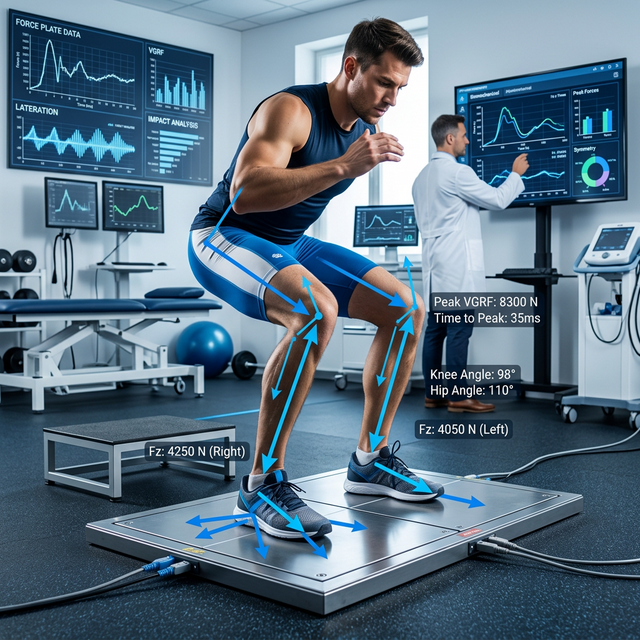
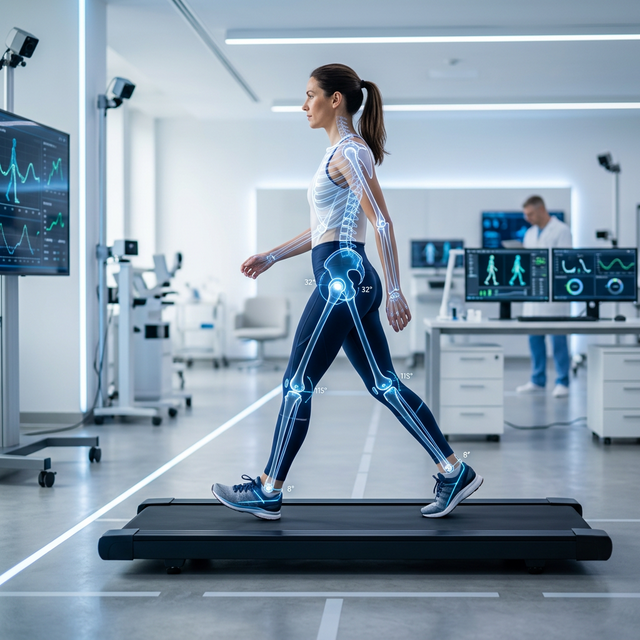
L'analyse moderne de la marche évalue plusieurs dimensions, notamment les paramètres spatio-temporels (longueur de foulée, cadence, vitesse de marche), la cinématique (angles des articulations, amplitude de mouvement), la cinétique (forces de réaction du sol, moments articulaires) et les indices de stabilité dynamique. Ces mesures dressent collectivement un tableau complet de la qualité des mouvements d'un individu.
Technologie derrière l'analyse de la démarche
L'analyse traditionnelle de la démarche repose sur des systèmes optiques basés sur des marqueurs (Vicon, OptiTrack) nécessitant des marqueurs réfléchissants fixés sur le corps. Les systèmes sans marqueur émergents comme HoloMotion utilisent la vision par ordinateur alimentée par l'IA pour suivre 33 articulations du corps sans aucun équipement portable, atteignant une précision de niveau clinique (RMSE ≤ 2,5°) tout en réduisant considérablement le temps et les coûts de configuration.
Applications cliniques
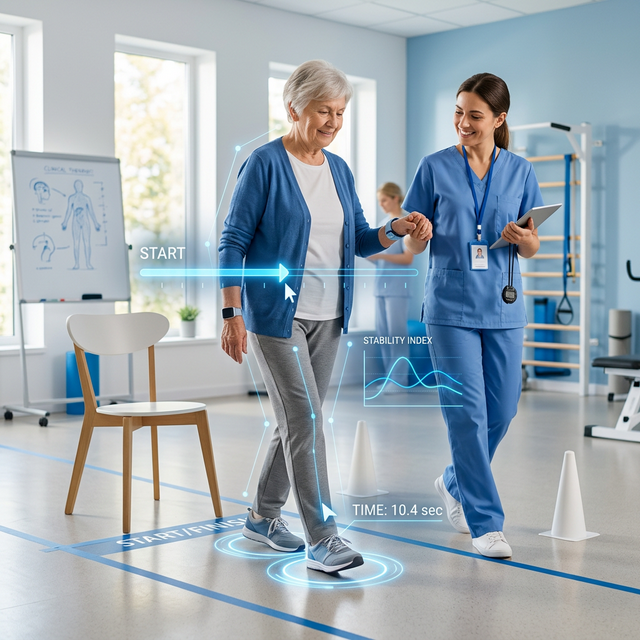
L'analyse de la marche est largement appliquée à la planification de la chirurgie orthopédique, à la réadaptation neurologique (accident vasculaire cérébral, maladie de Parkinson), au dépistage du développement pédiatrique, à l'optimisation de l'ajustement des prothèses et à l'évaluation des risques de chute chez les personnes âgées. Il transforme l'observation clinique subjective en mesures quantitatives et reproductibles.