Contesto del caso
Un corridore ricreativo maschio di 28 anni si è presentato con dolore al ginocchio destro sviluppatosi 6 settimane dopo aver aumentato il volume di corsa settimanale da 20 km a 35 km. L'esame clinico ha suggerito la sindrome dolorosa femoro-rotulea. Il medico curante ha richiesto un'analisi biomeccanica per identificare i fattori che contribuiscono e guidare la pianificazione del trattamento.
Protocollo di valutazione
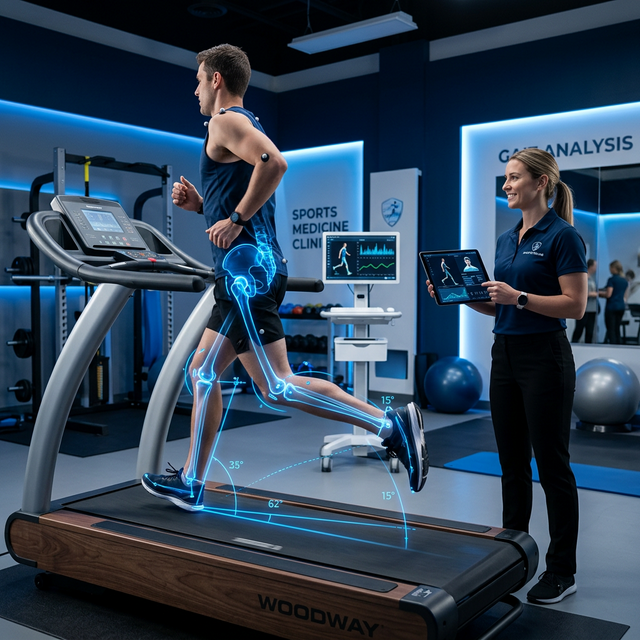
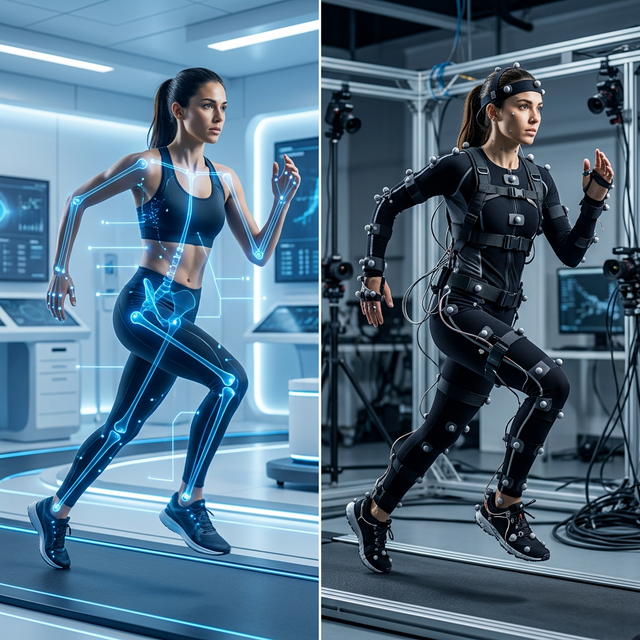
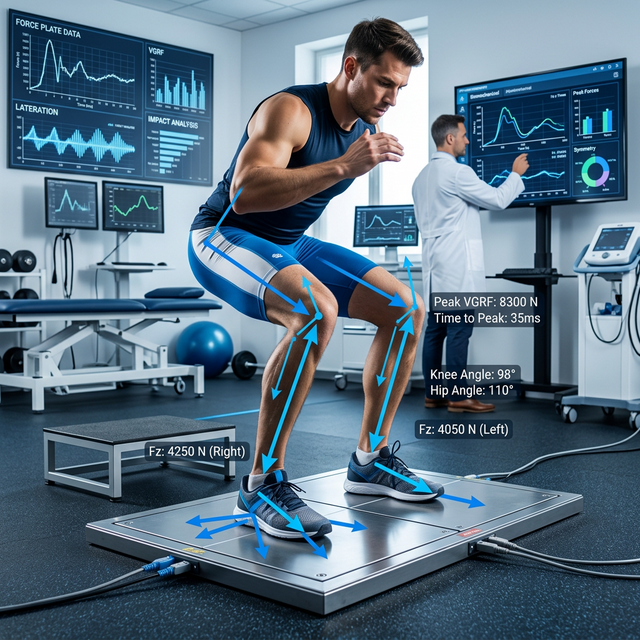
Utilizzando il sistema di acquisizione del movimento senza marcatori di HoloMotion, abbiamo eseguito un protocollo di valutazione standardizzato: corsa su tapis roulant a un ritmo autoselezionato (3 minuti), squat su una gamba sola (5 ripetizioni per lato) e atterraggio con salto in caduta (3 prove). Tutti i movimenti sono stati catturati utilizzando una singola fotocamera RGB-D posizionata a 2,5 metri dal soggetto.
Risultati chiave: analisi della forza di reazione al suolo
L'analisi biomeccanica basata sull'intelligenza artificiale ha rivelato diversi risultati significativi:
Il tasso di carico dell'impatto verticale sul lato destro era superiore del 23% rispetto al lato sinistro, indicando un assorbimento della forza asimmetrico. Il picco dell'angolo valgo del ginocchio durante lo squat su una gamba sola era di 14° a destra (rispetto a 8° a sinistra), suggerendo debolezza degli abduttori dell'anca. La caduta pelvica controlaterale durante la fase di appoggio della corsa è stata in media di 6° (normale: <4°), confermando l'insufficienza del gluteo medio.
Implicazioni cliniche
I risultati biomeccanici hanno informato direttamente il piano riabilitativo: programma mirato di rafforzamento del medio gluteo, riqualificazione dell'andatura per ridurre l'asimmetria della velocità di carico dell'impatto, progressione graduale del volume di corsa seguendo la regola del 10% e valutazione biomeccanica di follow-up a 6 e 12 settimane per monitorare i progressi.
Risultato
Al follow-up di 12 settimane, il paziente ha riferito la completa risoluzione del dolore al ginocchio. L'analisi biomeccanica ripetuta ha mostrato che l'asimmetria del tasso di carico d'impatto è stata ridotta all'8% (dal 23%), il valgo del ginocchio è migliorato a 9° (da 14°) e la caduta pelvica normalizzata a 3°. Il paziente è tornato con successo al volume di corsa settimanale di 35 km senza dolore.