Por qué es importante la evaluación científica para volver a correr
Volver a correr después de una lesión es una transición crítica que requiere una evaluación sistemática. El regreso prematuro sin una evaluación adecuada genera tasas de nuevas lesiones de hasta el 30-40%. Un protocolo científico de evaluación de la rehabilitación garantiza que los atletas avancen de forma segura en cada hito de recuperación.
Fase 1: Evaluación del rango de movimiento
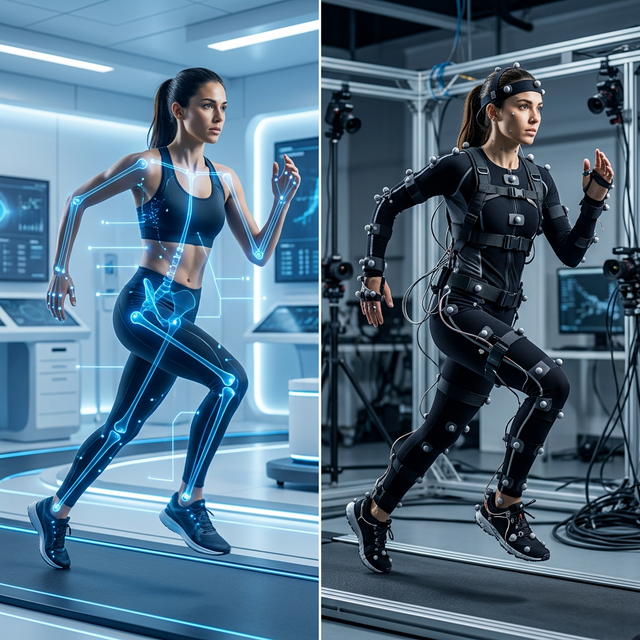
El primer paso evalúa la movilidad articular. Las mediciones clave incluyen el rango de flexión/extensión de la cadera, la capacidad de extensión total de la rodilla y el ángulo de dorsiflexión del tobillo. El análisis de IA de HoloMotion puede cuantificar estos parámetros en un único escaneo de 60 segundos, comparando la simetría bilateral y rastreando el progreso a lo largo del tiempo.
Fase 2: Pruebas de fuerza y potencia
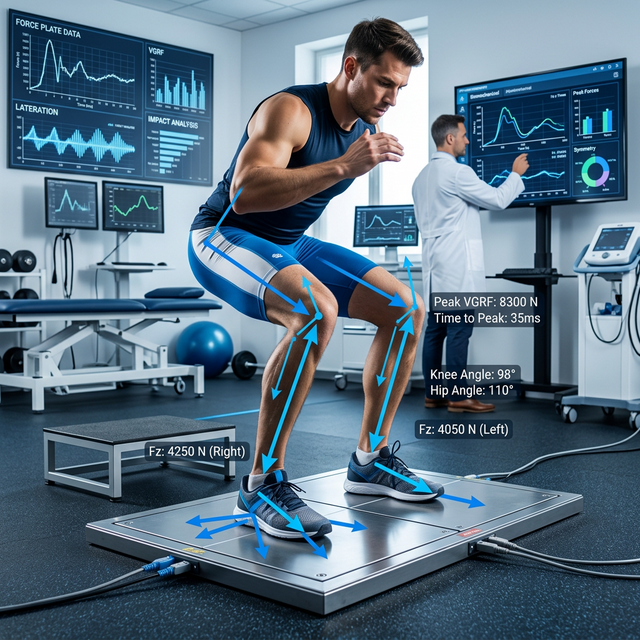
La evaluación de la fuerza muscular se centra en la relación de fuerza del cuádriceps/isquiotibiales, la distancia de la prueba de salto con una sola pierna y el control excéntrico durante el aterrizaje. El índice de fuerza del cuádriceps (proporción de miembros lesionados/no lesionados) debe alcanzar ≥90 % antes de iniciar las actividades de carrera.
Fase 3: Análisis dinámico del movimiento
Antes de volver a correr, los atletas deben demostrar patrones de movimiento de calidad. Las evaluaciones clave incluyen análisis de la forma de sentadilla con una sola pierna, evaluación de la mecánica del aterrizaje (ángulo de rodilla en valgo, control del tronco) y movimientos básicos de agilidad. El análisis biomecánico de HoloMotion proporciona una puntuación objetiva de estos patrones de movimiento.
Fase 4: Análisis de la marcha al correr
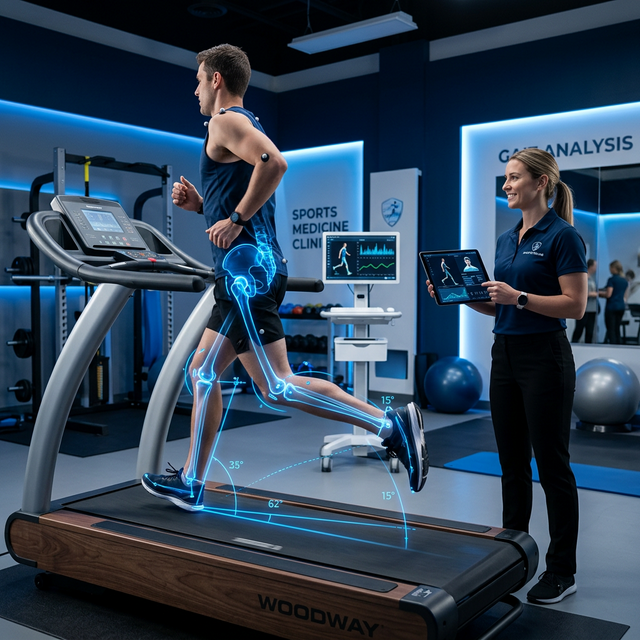
La fase final implica analizar la biomecánica real de la carrera: cadencia, tiempo de contacto con el suelo, oscilación vertical, patrón de pisada y simetría de carga articular. El análisis de la marcha impulsado por IA identifica patrones compensatorios que pueden indicar déficits persistentes o un riesgo elevado de volver a lesionarse.
Marco de decisión para volver a estar en funcionamiento
Una matriz de decisión integral integra todos los datos de evaluación: ≥90% de simetría de fuerza, ROM completo restaurado, patrones de movimiento de calidad logrados, ausencia de dolor durante todas las actividades y autorización médica. Sólo cuando se cumplan todos los criterios se deberá comenzar el regreso progresivo a la carrera.