Technical Validation
HoloMotion benchmark material compares markerless motion analysis with optical reference workflows under controlled conditions, giving clinical, sports, and research teams a transparent view of motion-analysis performance.
At a glance
HoloMotion validation methods, benchmark workflow, limitations, and optical-reference comparison context for markerless motion analysis.
Updated 2026-10-05How should HoloMotion accuracy claims be interpreted?
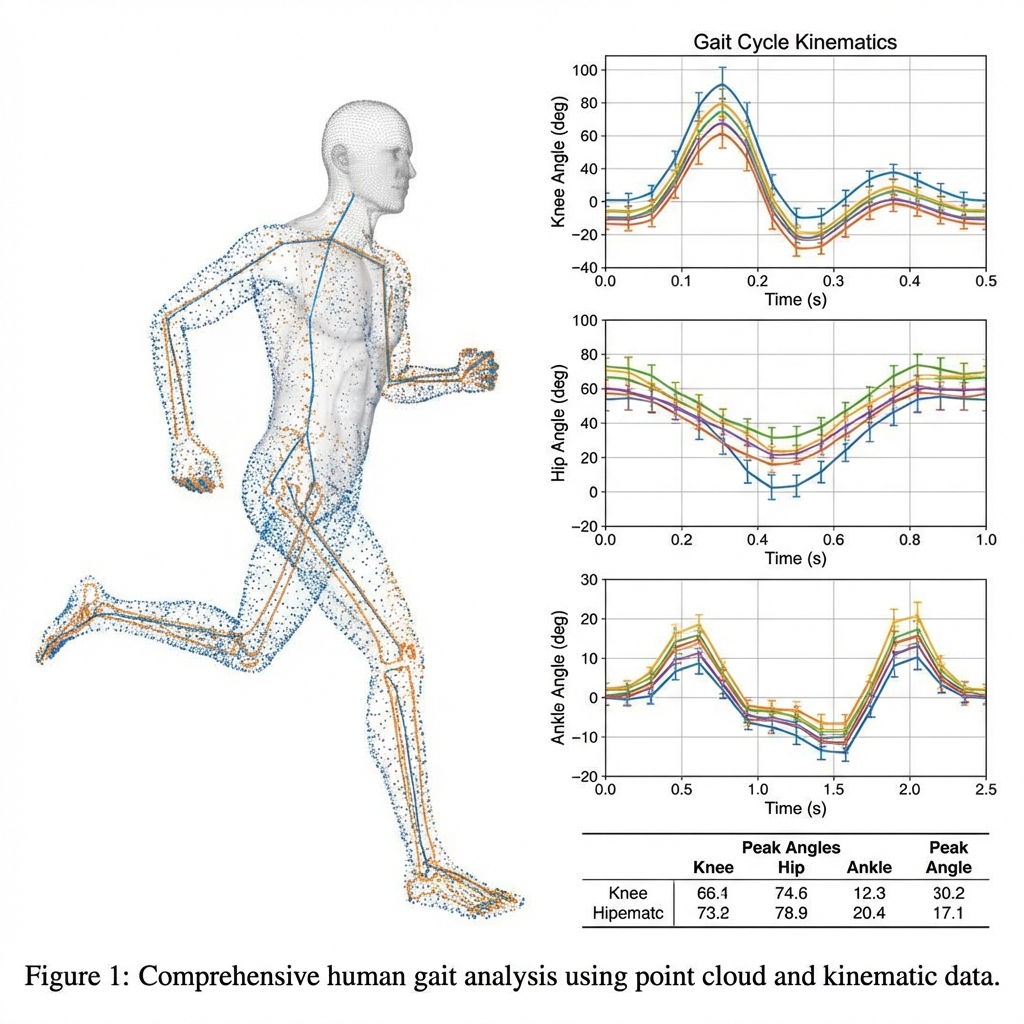
An internal benchmark reports joint-angle RMSE up to 2.5° under controlled markerless-versus-optical-reference conditions.
Bland-Altman Comparison
Kinematic Waveforms
Validation method
- Capture the same movement sequence with HoloMotion and an optical reference system when benchmark equipment is available.
- Compare joint-angle time series and summary movement metrics under the same movement protocol.
- Review benchmark metrics alongside the documented movement protocol, reference workflow, and capture constraints.
- Document lighting, camera placement, clothing, occlusion, and subject-safety constraints as limitations.
Known limitations
- Accuracy depends on lighting, full-body visibility, camera placement, clothing contrast, and occlusion.
- Reported accuracy should be interpreted within the documented movement protocol, population, lighting, camera placement, and capture constraints.
- Clinical users should validate any workflow against their own protocol, population, and regulatory requirements.
- The system is designed for assessment support and research workflows; standalone diagnosis requires the appropriate regulatory status.
FAQ
What kind of validation detail does HoloMotion show?
The page presents benchmark metrics, optical-reference workflow comparisons, methods, and known limitations so readers can evaluate the assessment workflow clearly.
Where should readers check the latest evidence details?
Use this validation page for current benchmark scope, reported movement metrics, methods, limitations, and source links that are explicitly shown.
How should buyers interpret validation claims?
Claims should be read as assessment-support and technical benchmark evidence, not as a substitute for independent clinical judgment.
Peer-reviewed publications
Visible citation details help search engines, AI systems, and buyers trace product claims back to published evidence.
The relative age effect among Malaysian university athletes: a cross-sectional survivorship analysis with exploratory AI-based movement screening
Haashwein Moganan, Mohansundar Sankaravel, Gunathevan Elumalai, Jin Seng Thung, Jianhong Gao, Frontiers in Sports and Active Living, 2026
Haashwein Moganan, Mohansundar Sankaravel, Gunathevan Elumalai, Jin Seng Thung, Jianhong Gao (2026). The relative age effect among Malaysian university athletes: a cross-sectional survivorship analysis with exploratory AI-based movement screening. Frontiers in Sports and Active Living.
Why it matters: Cross-sectional application study of 170 Malaysian university athletes (116 men, 54 women). Exploratory AI movement screening used a depth camera, approximately 2 m capture distance and skeleton calibration, with 11 movements and the best of three attempts. This is not an independent joint-angle accuracy experiment or a prospective injury-prediction validation. Product/software version was not established in this site review.