Clinical Healthcare
Clinical gait and mobility assessment using markerless 3D vision, biomechanical modeling, joint ROM tracking, posture screening, and TUG testing.
At a glance
Clinical Healthcare: Clinical gait and mobility assessment using markerless 3D vision, biomechanical modeling, joint ROM tracking, posture screening, and TUG testing.
Updated May 2026Comprehensive 3D Gait Analysis
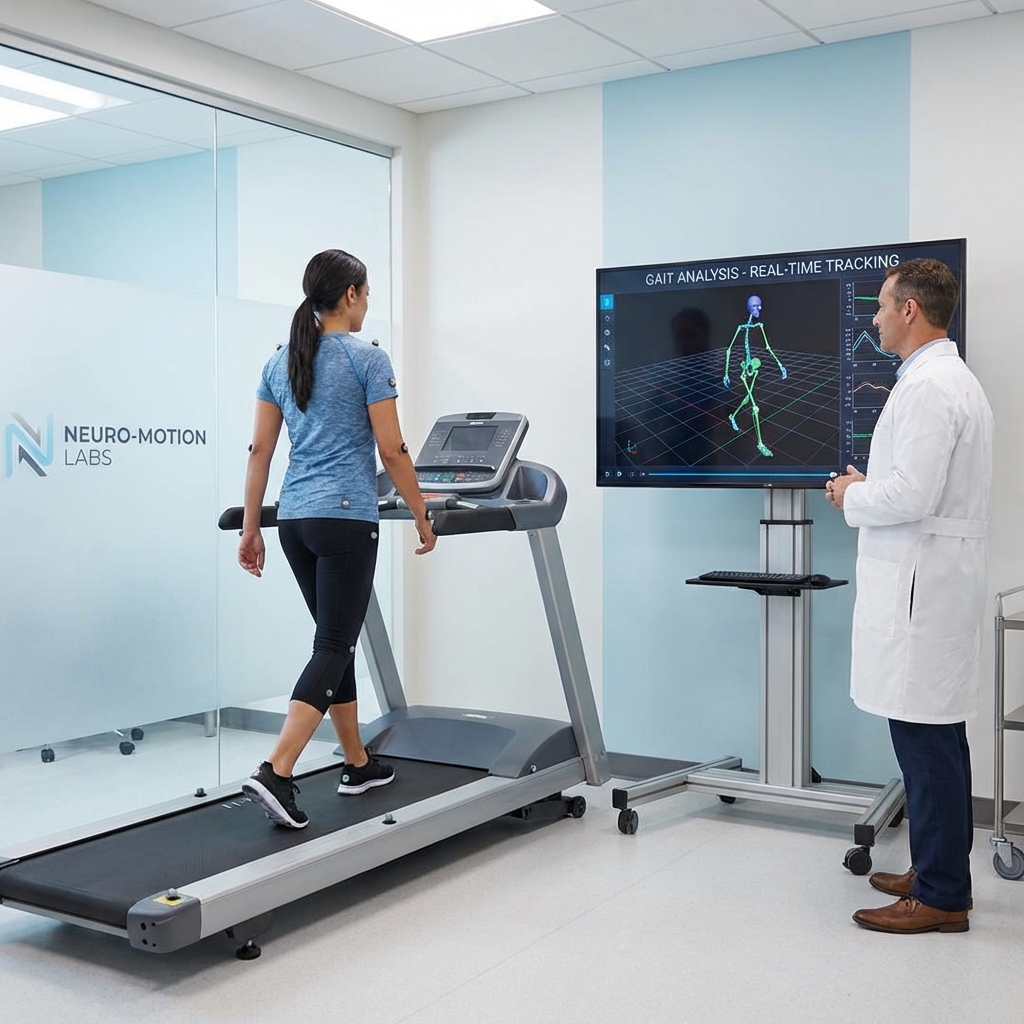
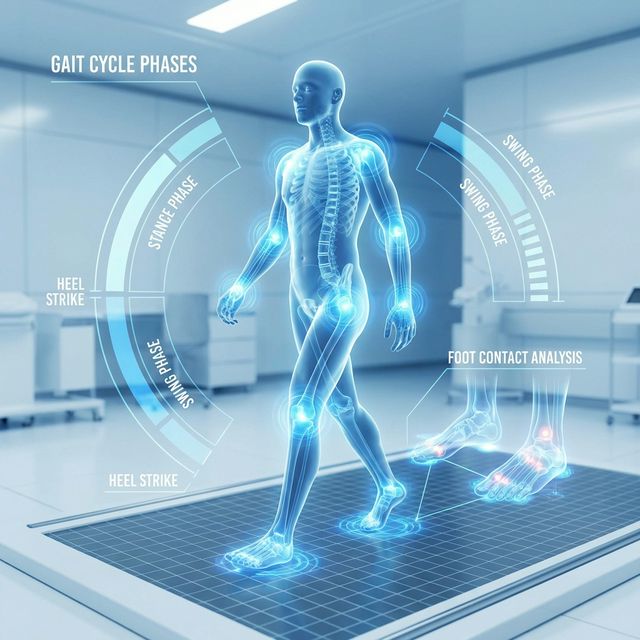
Using pure 3D machine vision algorithms and biomechanical modeling, our system precisely identifies human keypoint changes during walking without wearable sensors or pressure plates. It outputs key gait indicators for neck, trunk, hip, knee, and foot, along with joint angle data covering the full gait cycle — foot contact, support, extension, and swing phases.
Precise Joint ROM Assessment
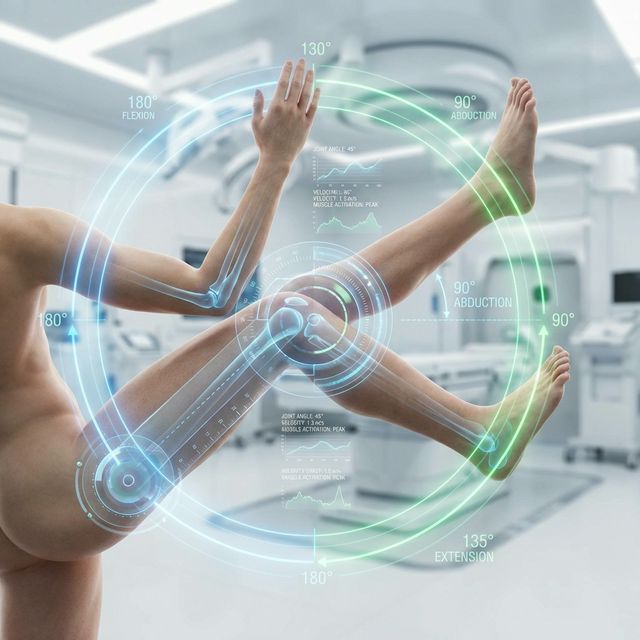
Breaking down movements by body segment — neck, trunk, upper and lower limbs — the system precisely captures range of motion, deviation angles, and deviation time ratios during movement. This provides objective, quantifiable data for joint injury rehabilitation, post-surgical functional assessment, and clinical research.
Body Posture & Spinal Screening
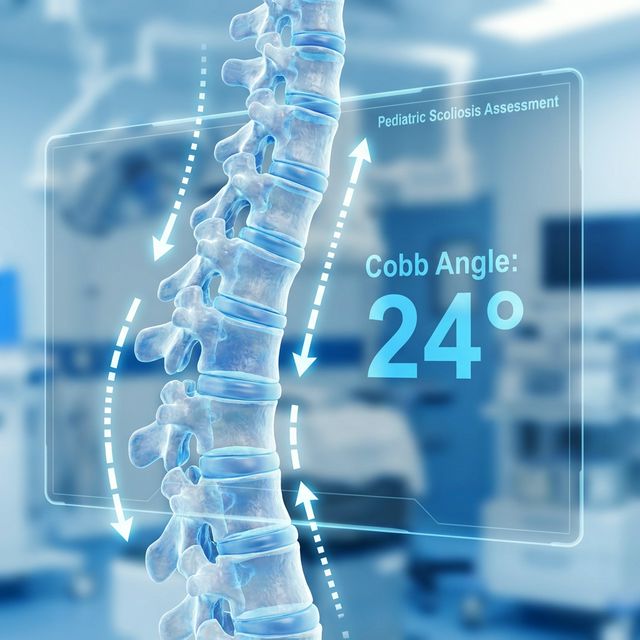
3D vision technology detects key anatomical positions during static standing in both coronal and sagittal planes, analyzing posture across upper limbs, trunk, spine, hip, and lower limbs. It precisely quantifies scoliosis, shoulder asymmetry, and X/O-leg deviations, making it especially suitable for pediatric and adolescent spinal health monitoring.
Timed Up-and-Go (TUG) Test
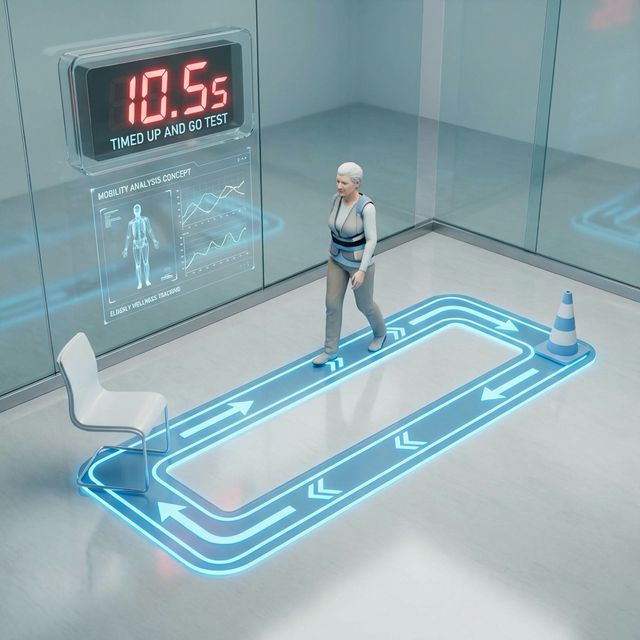
Requiring no markers, sensors, or additional personnel, the system automatically records precise timing for the complete stand-walk-sit sequence, including turning time, standing time, and sitting time. It simultaneously outputs step length, cadence, velocity, and comprehensive biomechanical data for fall risk screening and rehabilitation tracking.
FAQ
How does HoloMotion support Clinical Healthcare?
Clinical gait and mobility assessment using markerless 3D vision, biomechanical modeling, joint ROM tracking, posture screening, and TUG testing. It uses markerless camera or video analysis to turn movement into reviewable gait, posture, ROM, symmetry, and functional metrics.
Who is this workflow designed for?
It is designed for clinical, sports, research, rehabilitation, wellness, and enterprise teams that need repeatable movement-assessment evidence without marker-based lab setup.
What should teams verify before deployment?
Teams should confirm local workflow requirements, consent, privacy handling, camera placement, and whether any jurisdiction-specific medical-device clearance is required for their use case.
From capture to professional review
Before capture, select the assessment and record the reason for testing, movement protocol, side and relevant constraints. Assign an operator and a professional who will review the result.
During capture, follow the configured protocol and check framing, visibility, clothing and occlusion. Repeat a trial when the capture is incomplete rather than interpreting an unreliable output.
Review the report alongside the recorded task and capture quality. For follow-up, retain comparable conditions and protocol/version information. A difference between visits should be interpreted with measurement variability and clinical context.
Movement assessment supports professional judgment. A screening index alone does not establish a diagnosis, treatment effect or future injury probability.