Movement Risk Screening
Comprehensive Musculoskeletal Assessment
AI-powered full-body movement screening with 11 standardized tests for injury risk identification
Core Advantages
Powered by 3D Vision AI, breaking through traditional assessment limitations
11-Test Battery
Comprehensive screening covering overhead squat, lunge, single-leg balance, wall angel, and more — assessing mobility, stability, and neuromotor control.
AI Risk Classification
Automatic composite scoring with red/yellow/green risk levels for each body region, generating targeted intervention recommendations.
Video-Guided Tests
Each test includes instructional video guidance, ensuring standardized execution even by non-specialist operators.
Population Screening
Rapid batch screening capability for teams, corporate wellness, and school sports programs — 5 minutes per person.
Feature Highlights
Covering the complete assessment workflow
Standardized Test Videos
11 movement tests including overhead squat, lunge squat, single-leg balance, wall angel, neck flexion/extension/tilt, and trunk rotation.
Composite Risk Report
Aggregated risk score per body region with trend tracking across multiple sessions.
Targeted Training Plans
Based on identified weaknesses, auto-generates corrective exercise programs with AI coaching guidance.
Standardized Test Videos
11 standardized movement tests with video guidance
Report Example
Structured report template, precisely quantifying assessment characteristics
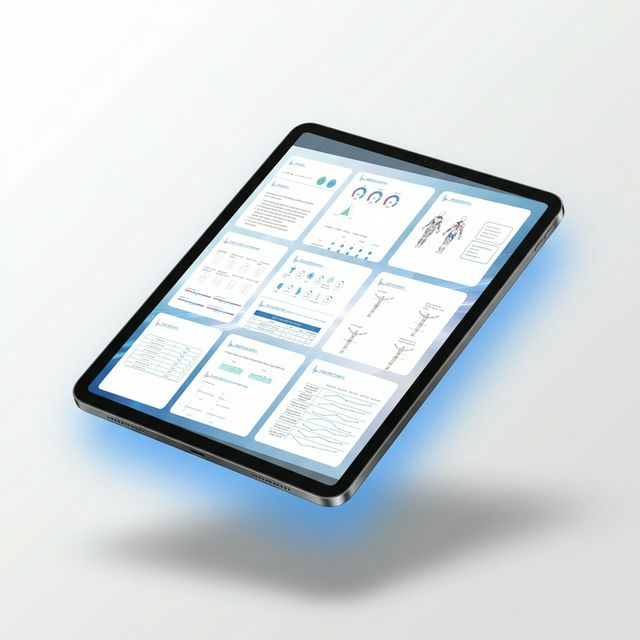
How to read and compare the report
The images on this page illustrate the HoloMotion report interface. Open the original image to inspect the layout; it is not a new accuracy experiment or evidence of treatment benefit.
Read parameter tables together with the recorded movement, side and angle convention. Check axes and units before comparing curves. A percentage displayed as a movement-risk index is not necessarily a calibrated probability of injury.
Before repeating an assessment, record product/version, task, camera position, lighting, clothing, assistance and trial-quality decisions. Compare only sufficiently similar trials and interpret change with professional context.